Trenchless Sewer Repair Services
Non-destructive subterranean pipeline rehabilitation engineered for residential and commercial properties in Greer, SC—restoring sewer lines through existing cleanouts and small access points. For Greer homeowners, start at trenchless sewer repair in Greer, SC.
Specialized Trenchless Capabilities
Select any service below to explore detailed technical processes, equipment requirements, diagnostic indicators, and transparent price driver factors.
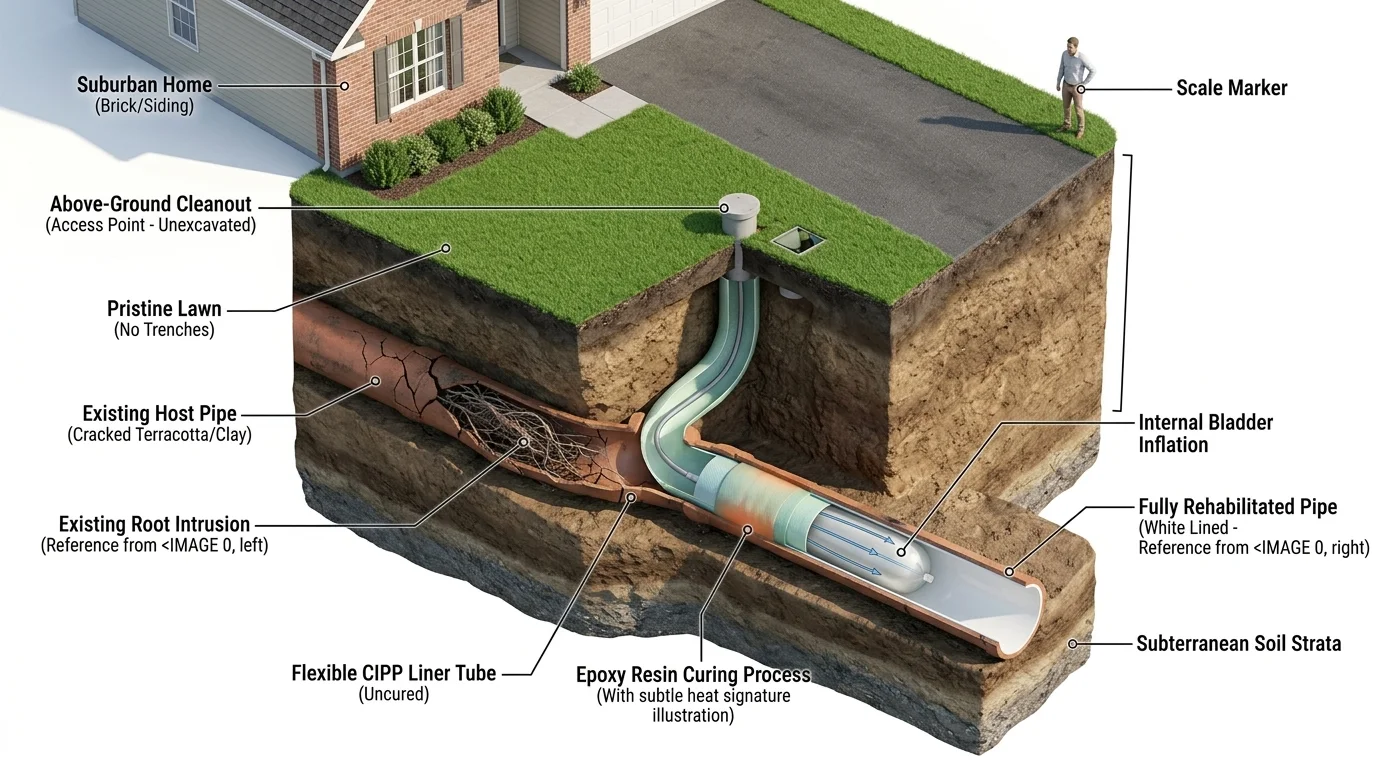
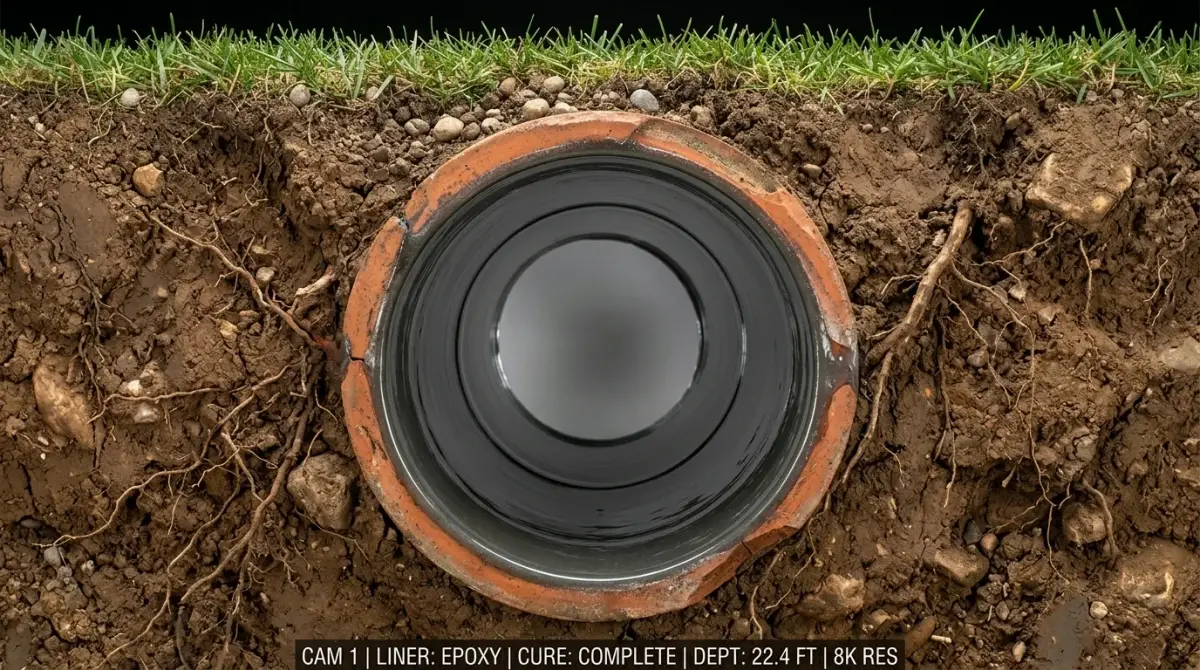
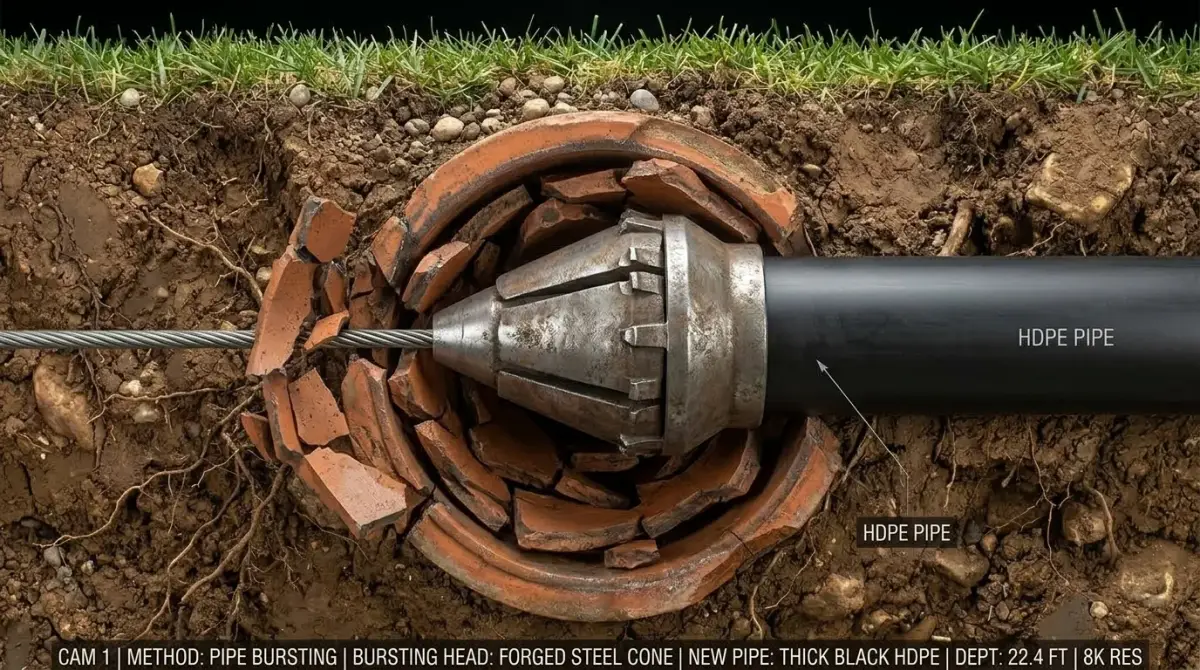
Modern Trenchless Restoration vs. Traditional Open-Trench Digging
Compare the operational, financial, and environmental advantages of non-destructive pipe rehabilitation against destructive backhoe excavation.
Our 4-Stage Non-Destructive Workflow
Every field assignment follows strict diagnostic and restoration protocols to ensure structural compliance with Greer and South Carolina plumbing standards.
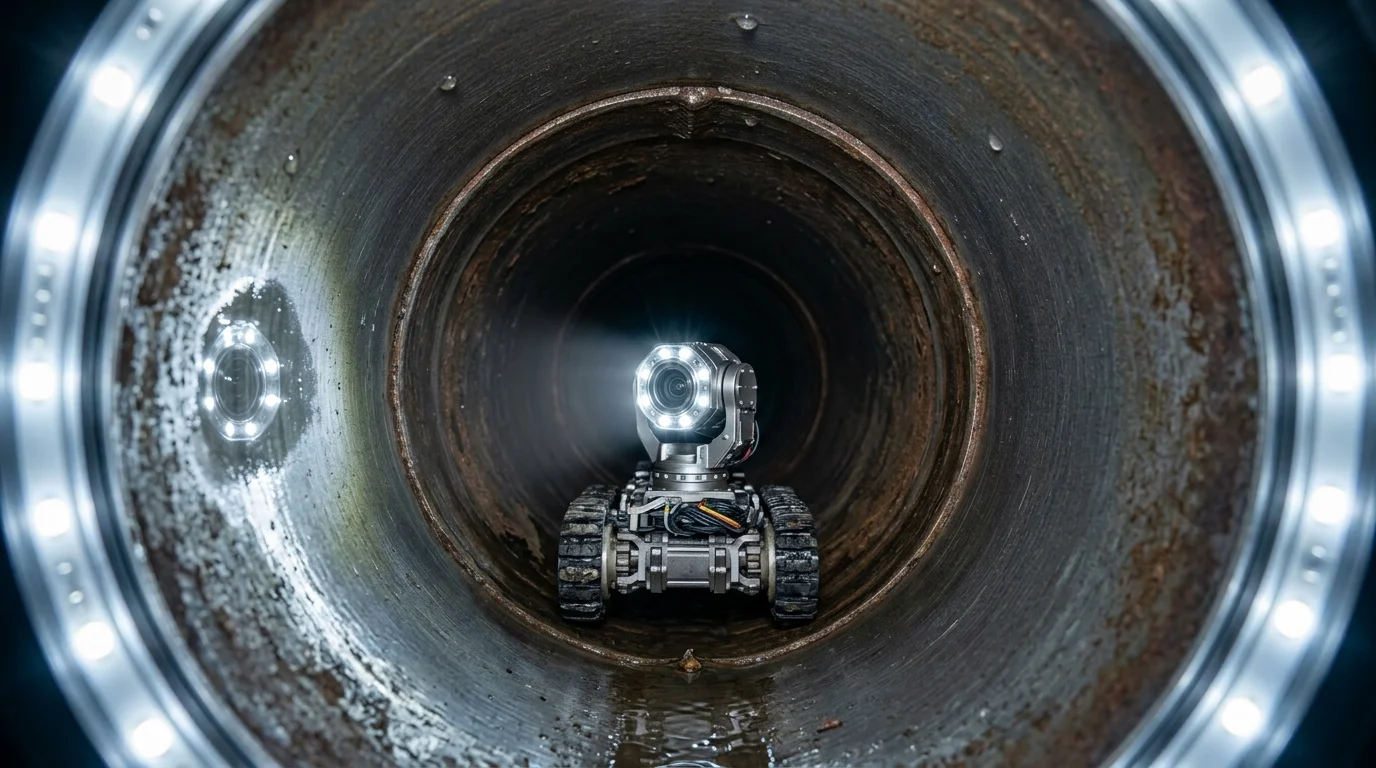
HD Video Camera Diagnostic Survey
Technicians pass a self-leveling fiber-optic camera through existing cleanouts to map the exact depth, linear footage, fractures, and root intrusion locations with foot-by-foot accuracy.
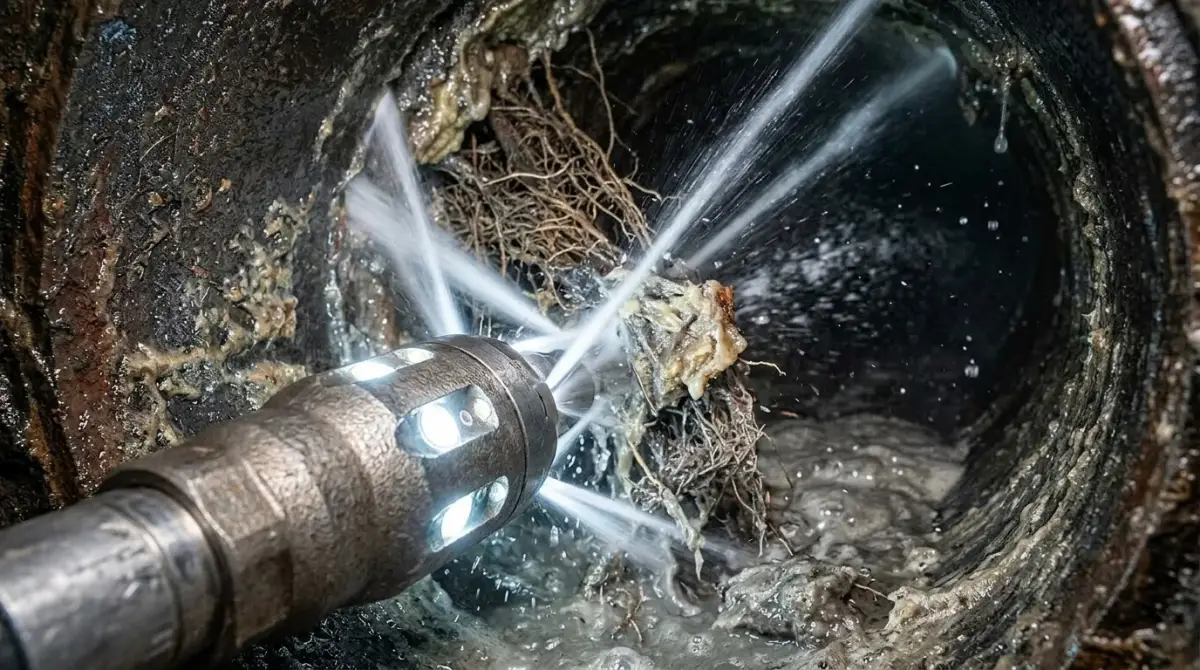
4,000 PSI High-Pressure Hydro-Jet Scour
Industrial water jetting heads scour internal pipe walls 360 degrees, stripping mineral tuberculation, grease sludge, and root masses down to bare pipe material to prepare the host line.
Non-Destructive Liner Inversion or Bursting
Depending on structural condition, an epoxy-saturated resin felt sleeve is inverted pneumatically and heat-cured, or a hydraulic expander head pulls seamless HDPE pipe through the line.
Post-Installation Camera Verification & Audit
A final high-definition camera pass inspects the completed jointless pipe structure, confirming flow diameter and seal integrity, and providing a digital recording for the property owner.
Why Upstate South Carolina Properties Require Trenchless Technology
Expansive Soil Settlement
Piedmont red clay shifts dramatically during humid summer rainstorms, exerting heavy lateral pressure on rigid cast iron lines. Trenchless epoxy liners create a flexible, continuous tube that absorbs soil movement without cracking.
Bell-and-Spigot Joint Invasion
Mature oak and pine trees seek moisture through porous mortar joints in vintage clay tile pipes. CIPP creates a seamless, jointless sleeve that blocks root entry at the joints.
Greer CPW & ReWa Standards
Trenchless repairs avoid most street cuts, which usually reduces right-of-way work. Greer CPW and ReWa approvals are confirmed when a job touches public lines.
Technical FAQ
Everything property owners ask before booking a trade service — answered honestly.
CIPP lining is the preferred method when the host pipe retains its circular structure with micro-fractures, joint separations, or root intrusions, sealing the line with a seamless epoxy sleeve. Hydraulic pipe bursting is required when the line has suffered complete structural collapse, extreme pipe bellies, or when you need to upsize pipe diameter from 4 inches to 6 inches.
Pricing is set by the contractor after a diagnostic inspection and depends on line depth, pipe diameter, and cleanout accessibility.
Yes, trenchless CIPP lining was specifically developed to rehabilitate subterranean sewer laterals buried beneath concrete driveways, brick paver patios, porches, and slab foundations without cutting or excavating surface hardscapes.
This page covers sewer and drain lines. Call (864) 894-8055 to ask about other pipe work.
Most residential trenchless sewer lining and pipe bursting installations are usually completed in one visit, and the crew confirms the timing for your line when you call. Technicians perform the initial video inspection, clear blockages via hydro-jetting, invert and cure the structural liner, and verify flow within one visit.
No. The liner takes up a small amount of the pipe diameter. Its smooth, jointless interior reduces friction and helps flow.
Trenchless methods rehabilitate vitrified clay tile, vintage cast iron, PVC, and postwar Orangeburg bituminous fiber pipes through either epoxy resin relining or hydraulic pipe bursting replacement.
Repairs performed on private property within property lines usually do not need a street excavation permit. If repairs connect into public rights-of-way or ReWa municipal collection mains, the crew confirms the filings your job needs.
A properly installed CIPP liner or HDPE pipe is built for long-term service. Ask us for the manufacturer design life and warranty terms for your pipe.